this is a legend...when i was 13 years old that happend in my school.
i was in the school bathroom i was looking at the mirrow and a starnge light apper from the toilet
daniela ,laura were scared i was too.Then something strange came out from the toilet it was a strange figure that came to us we were so scared then we told us some strange word i could remenber some that he told us " You will die if you dont kill the one thta you realy love" we didnt know what to do. the sara arrive to the bathroom she saw us and ask what happend we told her and she laugh she didnt beleave us!
we didnt know how we will have to kill that person and how we will know who is the person that we realy love it was strange it was like a dream but it wasnt
AT the next day i wake up i call laura and she didnt answer i feel scared the i went to her home and her parent gave me the new..she death i was so sad and the i remenber daniela i went fast to call her...she aswer me and she told me that she was scarde too we met us in a restaurant with sara then something strange happend daniela kill her boyfriend i was scared but then i almost do pee some came and kill daniela i was so sacred that i run away then the man continues me and i feld down then sara told me you were right sorry mafe then that man kill me
and now there are some legens that tell that there is a girl that right strange and scarde histories that realy happend
miércoles, 17 de febrero de 2010

Abraham Lincoln
Lincoln was born on Feb. 12, 1809, in a log cabin in Hardin (now Larue) County, Ky. Indians had killed his grandfather, Lincoln wrote, "when he was laboring to open a farm in the forest" in 1786; this tragedy left his father, Thomas Lincoln, "a wandering laboring boy" who "grew up, literally without education." Thomas, nevertheless, became a skilled carpenter and purchased three farms in Kentucky before the Lincolns left the state. Little is known about Lincoln's mother, Nancy Hanks Lincoln. Abraham had an older sister, Sarah, and a younger brother, Thomas, who died in infancy.
In 1816 the Lincolns moved to Indiana, "partly on account of slavery," Abraham recalled, "but chiefly on account of difficulty in land titles in Kentucky." Land ownership was more secure in Indiana because the Land Ordinance of 1785 provided for surveys by the federal government; moreover, the Northwest Ordinance of 1787 forbade slavery in the area. Lincoln's parents belonged to a faction of the Baptist church that disapproved of slavery, and this affiliation may account for Abraham's later statement that he was "naturally anti-slavery" and could not remember when he "did not so think, and feel." Indiana was a "wild region, with many bears and other wild animals still in the woods." The Lincolns' life near Little Pigeon Creek, in Perry (now Spencer) County, was not easy. Lincoln "was raised to farm work" and recalled life in this "unbroken forest" as a fight "with trees and logs and grubs." "There was absolutely nothing to excite ambition for education," Lincoln later recalled; he attended "some schools, so called," but for less than a year altogether. "Still, somehow," he remembered, "I could read, write, and cipher to the Rule of Three; but that was all." Lincoln's mother died in 1818, and the following year his father married a Kentucky widow, Sarah Bush Johnston. She "proved a good and kind mother." In later years Lincoln could fondly and poetically recall memories of his "childhood home." In 1828 he was able to make a flatboat trip to New Orleans. His sister died in childbirth the same year. In 1830 the Lincolns left Indiana for Illinois. Abraham made a second flatboat trip to New Orleans, and in 1831 he left home for New Salem, in Sangamon County near Springfield. The separation may have been made easier by Lincoln's estrangement from his father, of whom he spoke little in his mature life. In New Salem, Lincoln tried various occupations and served briefly in the Black Hawk War (1832). This military interlude was uneventful except for the fact that he was elected captain of his volunteer company, a distinction that gave him "much satisfaction." It opened new avenues for his life
In 1816 the Lincolns moved to Indiana, "partly on account of slavery," Abraham recalled, "but chiefly on account of difficulty in land titles in Kentucky." Land ownership was more secure in Indiana because the Land Ordinance of 1785 provided for surveys by the federal government; moreover, the Northwest Ordinance of 1787 forbade slavery in the area. Lincoln's parents belonged to a faction of the Baptist church that disapproved of slavery, and this affiliation may account for Abraham's later statement that he was "naturally anti-slavery" and could not remember when he "did not so think, and feel." Indiana was a "wild region, with many bears and other wild animals still in the woods." The Lincolns' life near Little Pigeon Creek, in Perry (now Spencer) County, was not easy. Lincoln "was raised to farm work" and recalled life in this "unbroken forest" as a fight "with trees and logs and grubs." "There was absolutely nothing to excite ambition for education," Lincoln later recalled; he attended "some schools, so called," but for less than a year altogether. "Still, somehow," he remembered, "I could read, write, and cipher to the Rule of Three; but that was all." Lincoln's mother died in 1818, and the following year his father married a Kentucky widow, Sarah Bush Johnston. She "proved a good and kind mother." In later years Lincoln could fondly and poetically recall memories of his "childhood home." In 1828 he was able to make a flatboat trip to New Orleans. His sister died in childbirth the same year. In 1830 the Lincolns left Indiana for Illinois. Abraham made a second flatboat trip to New Orleans, and in 1831 he left home for New Salem, in Sangamon County near Springfield. The separation may have been made easier by Lincoln's estrangement from his father, of whom he spoke little in his mature life. In New Salem, Lincoln tried various occupations and served briefly in the Black Hawk War (1832). This military interlude was uneventful except for the fact that he was elected captain of his volunteer company, a distinction that gave him "much satisfaction." It opened new avenues for his life
jueves, 3 de diciembre de 2009
ThankGiving
Thanksgiving Day is a joyous family festival celebrated with lot of enthusiasm in US, Canada and several other countries. Thanksgiving Day Festival commemorates the feast held by the Pilgrim colonists and members of the Wampanoag people at Plymouth in 1621. On this day people express gratitude to God for his blessings and give thanks to dear ones for their love & support. Feasting with family is an integral & most delightful part of Thanksgiving Day celebrations.
Thanksgiving Day Tradition
Thanksgiving Day is a communal celebration marked as a sense of gratitude people feel for all the good things in life. This is done by offering prayers, gifting your near and dear ones. The fourth Thursday in the month of November is marked for the yearly celebration. The tradition of Thanksgiving continues till date in the form ofFamily Reunion and FeastingFamily feast is an important tradition during Thanksgiving. The entire family sits at the table during dinner and offer prayer to the Lord Almighty for his continuous grace. It is also a time for relatives living in different places to come together and celebrate. Tradition of TurkeyThe traditional stuffed turkey adorns every dinner table during the feast. Pumpkin pie, Cranberry sauce, Corns are some of the dishes cooked everywhere to mark the day. Though historians don't have an evidence to prove that turkey was eaten during the first Thanksgiving dinner, but the thanksgiving celebration will be incomplete without it.ParadesThe traditional Thanksgiving parade probably started with President Lincoln proclaiming it an official day. The full- dress parade is a way to display the country's military strength and discipline. The main aim of such parades is to lift the spirits of the spectators, provide them with wholesome entertainment. In the present day, parades are accompanied with musical shows and celebrities.Football GamesWatching NFL football during Thanksgiving is a popular tradition. The traditional game between the Detroit Lions and the Green Bay Packers continues. One of the most memorable games having been played on this day.
Thanksgiving Day Tradition
Thanksgiving Day is a communal celebration marked as a sense of gratitude people feel for all the good things in life. This is done by offering prayers, gifting your near and dear ones. The fourth Thursday in the month of November is marked for the yearly celebration. The tradition of Thanksgiving continues till date in the form ofFamily Reunion and FeastingFamily feast is an important tradition during Thanksgiving. The entire family sits at the table during dinner and offer prayer to the Lord Almighty for his continuous grace. It is also a time for relatives living in different places to come together and celebrate. Tradition of TurkeyThe traditional stuffed turkey adorns every dinner table during the feast. Pumpkin pie, Cranberry sauce, Corns are some of the dishes cooked everywhere to mark the day. Though historians don't have an evidence to prove that turkey was eaten during the first Thanksgiving dinner, but the thanksgiving celebration will be incomplete without it.ParadesThe traditional Thanksgiving parade probably started with President Lincoln proclaiming it an official day. The full- dress parade is a way to display the country's military strength and discipline. The main aim of such parades is to lift the spirits of the spectators, provide them with wholesome entertainment. In the present day, parades are accompanied with musical shows and celebrities.Football GamesWatching NFL football during Thanksgiving is a popular tradition. The traditional game between the Detroit Lions and the Green Bay Packers continues. One of the most memorable games having been played on this day.
Chocolate Festival
What is the West Coast Chocolate Festival?
The West Coast Chocolate Festival—first launched in 2002— is a unique and innovative collection of individual events occurring throughout the TriCity area of Coquitlam, Port Moody and Port Coquitlam. Our various high calibre chocolate-themed adult and all-ages events celebrate the magic of chocolate and appeal to the senses and the soul, attracting guests from surrounding cities, the BC Lower Mainland and beyond. With chocolate as a powerful draw, we leverage events to bring people of all ages and cultures together as well as aim to raise awareness about proper consumption and the lesser-known positive benefits of the incredibly appealing food.
What is the goal of the festival?
The festival thrives upon a passion for empowering youth through mentorship initiatives by providing positions for students in various festival projects, which cover a wide variety of areas of study.
Mission Statement — Initially our goal was to raise funds for youth arts projects in the TriCities. However, by 2005 it was clear our true mission was creating mentored work experiences, and so our mission became:
To inspire and entertain through events that celebrate the magic of chocolate and appeal to the senses and the soul, and to facilitate mentored festival work experiences for youth, as well as creating presentation opportunities for emerging artists and performers.
When does the festival take place?
The West Coast Chocolate Festival ran annually until 2008 when we decided to take a one-year break to restructure and reintroduce the festival in 2009 with new and exciting events. In the past, the festival has typically taken place for a five-day period in the month of October, after Thanksgiving and before Halloween; however, the timeline remains quite flexible.
The West Coast Chocolate Festival—first launched in 2002— is a unique and innovative collection of individual events occurring throughout the TriCity area of Coquitlam, Port Moody and Port Coquitlam. Our various high calibre chocolate-themed adult and all-ages events celebrate the magic of chocolate and appeal to the senses and the soul, attracting guests from surrounding cities, the BC Lower Mainland and beyond. With chocolate as a powerful draw, we leverage events to bring people of all ages and cultures together as well as aim to raise awareness about proper consumption and the lesser-known positive benefits of the incredibly appealing food.
What is the goal of the festival?
The festival thrives upon a passion for empowering youth through mentorship initiatives by providing positions for students in various festival projects, which cover a wide variety of areas of study.
Mission Statement — Initially our goal was to raise funds for youth arts projects in the TriCities. However, by 2005 it was clear our true mission was creating mentored work experiences, and so our mission became:
To inspire and entertain through events that celebrate the magic of chocolate and appeal to the senses and the soul, and to facilitate mentored festival work experiences for youth, as well as creating presentation opportunities for emerging artists and performers.
When does the festival take place?
The West Coast Chocolate Festival ran annually until 2008 when we decided to take a one-year break to restructure and reintroduce the festival in 2009 with new and exciting events. In the past, the festival has typically taken place for a five-day period in the month of October, after Thanksgiving and before Halloween; however, the timeline remains quite flexible.
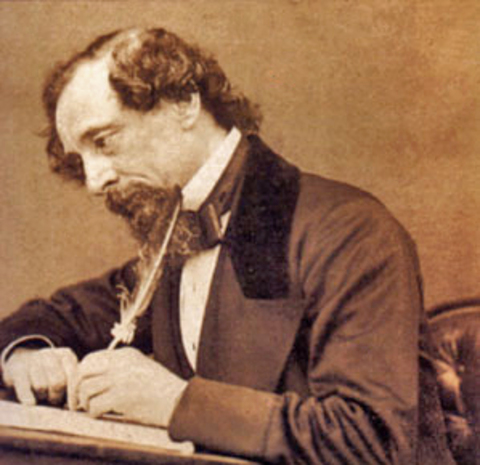
Charles Dickens
DICKENS, CHARLES JOHN HUFFAM (1812—1870), English novelist, was born on the 7th of February 1812 at a house in the Mile End Terrace, Commercial Road, Landport (Portsea)—a house which was opened as a Dickens Museum on 22nd July 2904. His father John Dickens (d. 1851), a clerk in the navy-pay office on a salary of £80 a year, and stationed for the time being at Portsmouth, had married in 1809 Elizabeth, daughter of Thomas Barrow, and she bore him a family of eight children, Charles being the second. In the winter of 1814 the family moved from Portsea in the snow, as he remembered, to London, and lodged for a time near the Middlesex hospital. The country of the novelist’s childhood, however, was the kingdom of Kent, where the family was established in proximity to the dockyard at Chatham from 1816 to 1821. He looked upon himself in later years as a man of Kent, and his capital abode as that in Ordnance Terrace, or 18 St Mary’s Place, Chatham, amid surroundings classified in Mr Pickwick’s notes as “ appearing “to be soldiers, sailors, Jews, chalk, shrimps, officers and dockyard men. He fell into a family the general tendency of which was to go down in the world, during one of its easier periods (John Dickens was now fifth clerk on £250 a year), and he always regarded himself as belonging by right to a comfortable, genteel, lower middleclass stratum of society. His mother taught him to read; to his father he appeared very early in the light of a young prodigy, and by him Charles was made to sit on a tall chair and warble popular ballads, or even to tell stories and anecdotes for the benefit of fellow-clerks in the office.
miércoles, 2 de diciembre de 2009
Suscribirse a:
Entradas (Atom)